Okay, let’s talk about tradition in cooking. Carbonara, you’re up first.
This creamy, little pasta is the culinary altar at which many food puritans kneel, holding reams of spaghetti in their hands chanting:
‘No cream, no garlic, no other pasta.’
Fine. Look, there’s a lot to be admired for preserving the traditional form – being able to trace a recipe as close as possible to its origin, it’s structure, and resisting contemporary temptations to go rogue with the truffle oil or herbs. I get it.
Tradition means blueprint. It’s a skeleton, holding the entire damn thing together, particularly with a carbonara, because without out, aren’t we essentially just mixing pasta and eggs and praying they don’t get scrambled?
But let’s not shackle ourselves too tightly to the original calling.
A recipe, indeed, carbonara, is not a legally binding contract. No recipe is, not even the ones I write for this bloody blog. They are frameworks. A recipe is something we hang the needs of our own lives, tastes, and circumstances on to. I do believe in structure and I do believe in tradition, but I also believe in the home cook’s right to cook to their own taste.
In my opinion, the best way to honour tradition is to know it, understand it, and then, if you must (or even want) you tweak it for taste and intention. Not to be wacky for no reason or to boast of new invention, but to welcome a recipe into your home and adapt it for your own personal taste, where it stands a much better chance of longevity in your rotation.
So, with the carbonara, I have some thoughts.
The recipe I have featured here, I believe to be as close to tradition as possible, however including garlic. My quiet rebellion. One clove, that’s all. However, having said that, I have some fairly flagrant opinions on what a carbonara could be in my home, if the below recipe was not possible to the letter.
Here goes nothing.
- The pasta – spaghetti, of course. It’s in the name. Would I make this with linguine? Absolutely. Tagliatelle? If I had no thin pastas in the house, then yes, but I’d probably serve less because damn it, this is a rich recipe. Any other short pasta? I don’t think I would. I would just go for a macaroni and cheese recipe, in which case.
- The pork – yes guanciale (cheek or jowl of the pig) is the most traditional, and I would recommend this not for tradition, but for that all important gorgeous fatty flavour needed for the sauce. Would it work with pancetta? Absolutely. It would be gorgeous, actually. Would I also do this with snipped rashers of everyday regular smoked bacon? Yes. Yes I would.
- The eggs – necessary. I don’t know what else to say. As fresh as possible.
- The cheese – Pecorino is the preferred, but I have absolutely made this with regular degular Parmesan. Pecorino cuts through the eggy richness a little better because it’s tangier, which not everyone loves, so I’ve also made a version with 50/50 ratios of both.
- The garlic – not traditional, not even a little bit, and purists would scream. Let them.
- The pepper – black, freshly cracked, and more of it than you think you need. No white pepper.
- The cream – none. Sorry. If you want to make a pasta sauce that uses cream there are hundreds of other recipes to turn to that is not a carbonara that will be incredible for being what it is, rather than being okay for trying to be what it is not. A lesson for us all, I dare say.
- The herbs – none. Not then, not now, not ever. But then again that goes against the ethos of this post, so parsley if you absolutely must disobey, but leave it off mine please.
And I said what I said.
Let’s go.
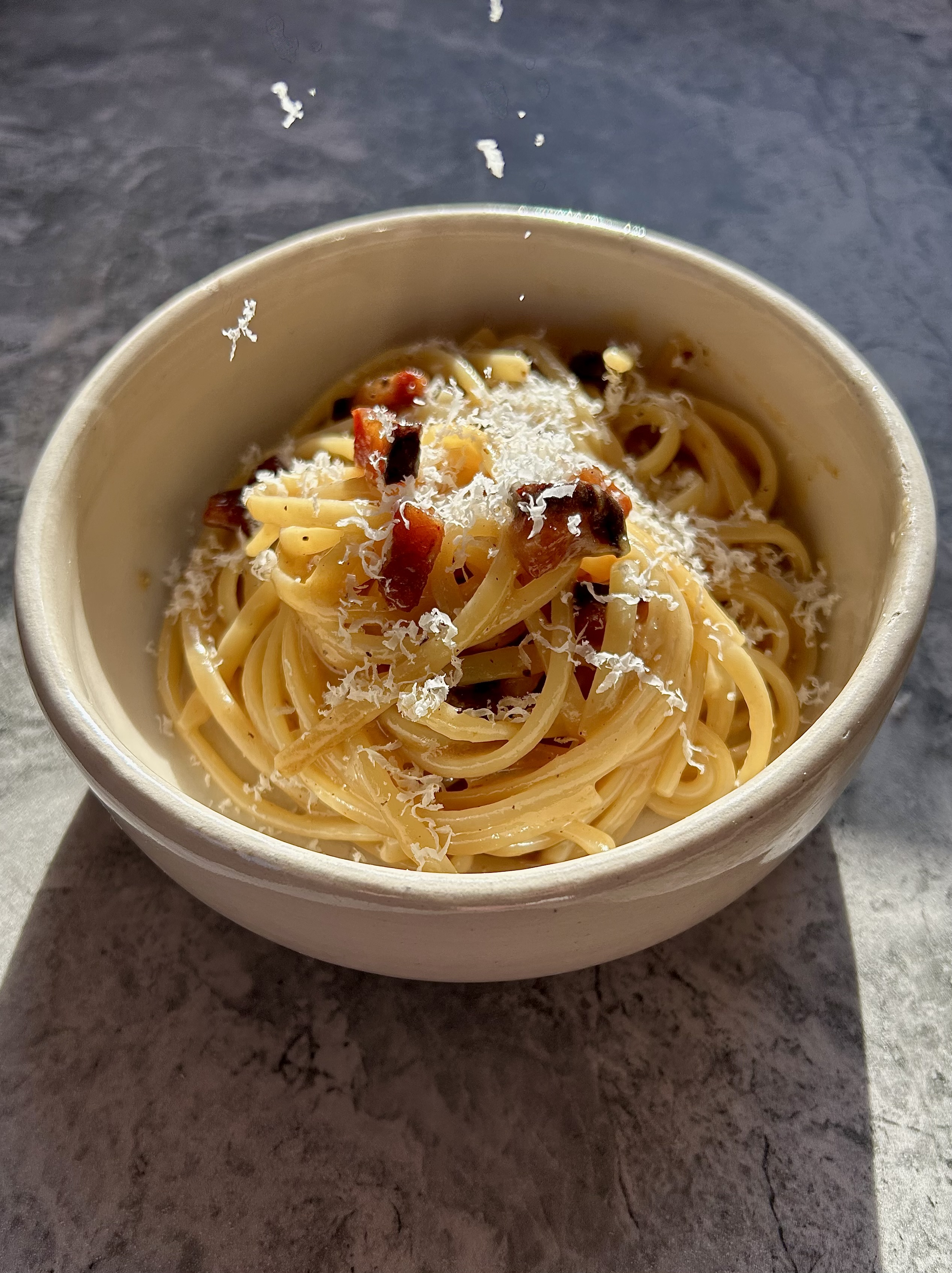
Serves 2
100g guanciale
2 egg yolks + 1 whole egg
50g Pecorino cheese + extra for serving
1 clove garlic
200g spaghetti
- Cut the guanciale into tiny pieces, as big as a baby’s fingernail, and then add to a frying pan on a medium heat. Fry, no need for olive oil or butter, stirring often, rendering the fat until the guanciale is crispy and browned and lying in a golden pool of its own fat. Don’t overcook until blackened or the fat will be bitter.
- Turn off the heat, spoon the guanciale bits into a bowl and cover for later, and keep the fat in the pan to one side to cool slightly.
- While it cools, grate your Pecorino cheese down to dust.
- Put the egg yolks, whole egg, and grated cheese into a bowl and then using a fine grater, mince in the garlic clove. Add in a hefty scrunch of black pepper and then whisk everything together to create a yellowy, smooth emulsion.
- Now add in about three or four tablespoons worth of the cool-ish guanciale fat, whisking as you go, until thoroughly combined.
- Bring a large pot of water to the boil, salt it generously, and add the spaghetti, cooking it for about a minute less than the packet would suggest so that it’s al dente. BTW – food writers must be so sick of writing that damn instruction every time we write a pasta recipe. I know I am, but it bears repeating.
- Lightly drain the pasta so that there is a small amount of salty water still clinging to it, and then immediately put the pasta back in the empty pot you boiled it in.
- Pour the eggy cheese sauce over the pasta, add the cooked guanciale pieces (reserving a small handful for the top) and toss gently until each strand of pasta is covered creamily.
- Serve immediately and top with the remaining guanciale, extra Pecorino, and black pepper.
 MIKEY AND THE KITCHEN.